It’s Now the Canadian Dream


American middle class is no longer the richest in the world

American middle class is no longer the richest in the world

(Excerpt from NYT on May 14, 2014 by Nicholas Kristoff)

It was in 1931 that the historian James Truslow Adams coined the phrase “the American dream.”

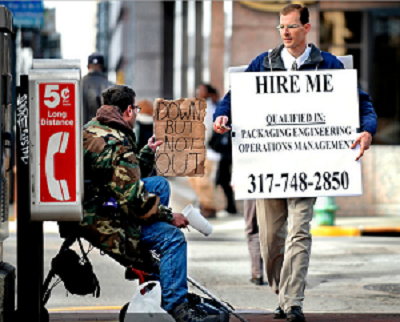
  • The American dream is not just a yearning for affluence, Adams said, but also for the chance to overcome barriers and social class. Yet today the American dream has derailed, partly because of growing inequality.
  • Or maybe the American dream has just swapped citizenship, for now it is more likely to be found in Canada or Europe — and a central issue in this year’s political campaigns should be how to repatriate it.
  • A report last month in The Times by David Leonhardt and Kevin Quealy noted that the American middle class is no longer the richest in the world, with Canada apparently pulling ahead in median after-tax income.
  • In fact, the discrepancy is arguably even greater. Canadians receive essentially free health care, while Americans pay for part of their health care costs with after-tax dollars.
  • Meanwhile, the American worker toils, on average, 4.6 percent more hours than a Canadian worker, 21 percent more hours than a French worker and an astonishing 28 percent more hours than a German worker, according to data from the Organization for Economic Cooperation and Development.
  • Canadians and Europeans also live longer, on average, than Americans do. Their children are less likely to die than ours. American women are twice as likely to die as a result of pregnancy or childbirth as Canadian women.
  • And, while our universities are still the best in the world, children in other industrialized countries, on average, get a better education than ours.
  • Most sobering of all: A recent O.E.C.D. report found that for people aged 16 to 24, Americans ranked last among rich countries in numeracy and technological proficiency.
  • Economic mobility is tricky to measure, but several studies show that a child born in the bottom 20 percent economically is less likely to rise to the top in America than in Europe. A Danish child is twice as likely to rise as an American child.
  • “America has become the advanced country not only with the highest level of inequality, but one of those with the least equality of opportunity,” according to Nobel-winning Economist Joseph Stiglitz.
  • Consider that the American economy has, over all, grown more quickly than France’s. But so much of the growth has gone to the top 1 percent that the bottom 99 percent of French people have done better than the bottom 99 percent of Americans.
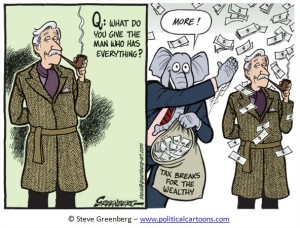
  • The top six hedge fund managers and traders averaged more than $2 billion each in earnings last year, partly because of the egregious “carried interest” tax break.
  • President Obama has been unable to get financing for universal prekindergarten; this year’s proposed federal budget for pre-K for all, so important to our nation’s future, would be a bit more than a single month’s earnings for those six tycoons.

Proposed Solutions

  • We could stop subsidizing private jets and too-big-to-fail banks, and direct those funds to early education programs that help break the cycle of poverty.
  • We can invest less in prisons and more in schools.
  • We can impose a financial transactions tax and use the proceeds to broaden jobs programs like the earned-income tax credit and career academies.
  • And, as Alan S. Blinder of Princeton University has outlined, we can give companies tax credits for creating new jobs.

It’s time to bring the American dream home from exile.

The American Dream

Click here to read article in its entirety

Average Americans Realize Something Republicans Don’t – Obama Does Care!

obamacare image

Know Why Rick Scott is Afraid You’ll Vote?

Here’s why:

(The following is an excerpt from The Miami Herald by Marc Caputo)

Rick Scott’s ‘awful’ poll numbers make Florida Republicans queasy

On Tuesday, as Scott kicked off the Legislature’s 60-day lawmaking session, he gave the annual state of the state speech, a campaign-like preview filled with job-creation statistics.

But many of Scott’s fellow Republicans were paying attention to a different set of numbers: a raft of poll data-points that make the GOP queasy because it shows Democrat Charlie Crist has broad support across Florida right now. The highlights:

• 34 percentage points — the margin Crist beats Scott by in Broward and Miami-Dade counties, according to one business interest’s statewide survey. This margin is 12 points greater than Democrat Alex Sink’s in the 2010 governor’s race. If she had earned Crist’s poll numbers in just these two counties, Sink would have won.

• 10 percentage points — the margin Crist beats Scott by in another business interest’s statewide poll.

• 8 percentage points — the margin Crist beats Scott by in two other business interests’ statewide polls.

• 7 percentage points — the margin Crist beats Scott by in a fourth business interest’s statewide poll.

• 6 percentage points — the margin Crist beats Scott by in a poll of Republican-controlled state House districts across Florida.

• 4 percentage points — the margin Crist beats Scott by in North Florida, a Republican stronghold. The number is well within the poll’s error margin. But it’s a cumulative 17-point shift in favor of Democrats compared to 2010, and Sink would have won the governor’s race with this North Florida margin.

• 2 percentage points — the margin Scott beats Crist by in a poll of Republican-controlled state Senate districts in North Florida. Again, it’s within the error margin. But again: If Sink had had this margin, she probably would have won the governor’s race.

“There’s no way to sugarcoat this: It’s awful,” said a top Florida Republican, one of a dozen who provided or confirmed with the Miami Herald the crosstabs, presentations or individual slices of the above-mentioned polls, six in all, which were taken in advance of the lawmaking session.

To read the article in its entirety, click here.

The Brainwashing Of My Dad By Fox, Rush Limbaugh & Hate Media

(If you’ve ever been curious about the impact of talk radio on the public discourse, following is a fascinating video that explains its rise and effect on ordinary Americans. Click here to see the video. Scroll down right side of page.)

[Excerpt from Daily Kos by Leslie Salzillo on March 4, 2014]

Many of us understand the damage that has been done by the likes of Rush Limbaugh, FOX News, and Hate Media. You can hear the promotion of blatant racism, homophobia, misogyny and bigotry just by turning on the tv, radio or computer. Malicious lies are perpetuated until they are believed by those who have been sucked in and who now use right-wing media as their only source of ‘news’. Jen Senko is a filmmaker who watched the transformation of her father as he slowly came to believe the extreme right-wing propaganda. Senko is now making a documentary about it called  The Brainwashing Of My Dad.

News Release – Hispanic Caucus Elects Officers

Polk County Democratic Executive Committee
Joe Clark
Joseph.clark4@gmail.com
Albyn L. Roman
Roman.polkdec@gmail.com

  Polk County Democratic Hispanic Caucus

Elects Officers, Sets Agenda 

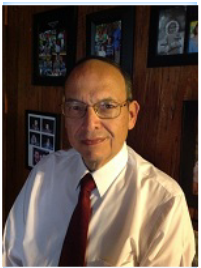
Albyn Roman

Albyn Roman

The Polk County Democratic Hispanic Caucus elected its first set of officers at its organizational meeting June 16.

Albyn L. Roman of Lakeland was elected president for the 2014-2016 term.  Rocco Anastasia of Lakeland was elected vice president and Betsy Oley, also of Lakeland, was elected secretary/treasurer.

The group heard presentations from two candidates, Michael “Mac” McKenna who is running for Congress from District 10 and Celeste Williams, who is running for the Florida House of Representatives from District 41.

The Caucus voted to hold its monthly meetings in the west end of the county on the third Thursday of each month. The next meeting will be held February 20 at 6:30 p.m. on the Lakeland campus of Polk State College, Room 1243.

The Caucus will also hold monthly meetings on the east side of the county. A location, time and place for those meetings is still to be determined.

“We want to make our meeting locations as convenient as possible for all our members,” said newly elected president Roman. “We will establish sites for meetings on both sides of our far-flung county.”

Club donation on its way to the Philippines

Our club’s donation to the Philippine Haiyan typhoon relief effort was presented to two Solivita Filipino groups and sent off to help that battered area recover.

Board members Ilene Malpero and Joe Clark presented the $1,000.00 check to a joint meeting of  Filipinos At Solivita and Kapamilya early in January. FAS president Rudy Julian and Kapamilya president Jun Tejada accepted the donation and expressed their gratitude to our club.

The amount was immediately sent off to Catholic Relief Services, one of the organizations coordinating the relief effort.

“This quick and open hearted response to people we have never met really shows what a generous group we have in the Solivita Democratic Club,” said Club President Marti Kara. “Our hearts go out to the people in the disaster area.”

Many thanks to all of our generous members who contributed to this effort.

Joe Clark
SDC Executive Board

New Pew Research Poll on Republicans

blindfolded people

  • According to a new Pew Research Poll, a growing number of Republicans believe generally accepted scientific discoveries like evolution is a myth, not even open for debate.
  • It makes us question whether a group of people who live in the most advanced scientific time in history should be leading us on such complex issues as public education, climate change, world affairs or technology.
  • How can Republicans and their Tea Party constituents prepare the next generation of scientists when they’ve closed the door on science?
  • It’s another important reason we must work to remove back-leaning Republicans from leadership roles in our congress and our state.

When Repubs Say Affordable HealthCare Act is not Working, They Must Be Excluding Seniors

(Excerpted from Centers for Medicare and Medicaid Services)

1375931248031

On eve of Medicare anniversary, new information shows a thriving program

  • On the eve of the 48th anniversary of the signing of Medicare and Medicaid into law, new information released today by the Department of Health and Human Services (HHS) shows a strong Medicare program. Over 6.6 million people with Medicare have saved over $7 billion on prescription drugs as a result of the Affordable Care Act. These savings average $1,061 per beneficiary in drug costs while a beneficiary is in the “donut hole” coverage gap that the law closes over time.
  • In addition, 16.5 million people with traditional Medicare took advantage of at least one free preventive service in the first six months of 2013.
  • This news comes on the heels of historically low levels of growth in Medicare spending. From 2010 to 2012, Medicare spending per beneficiary grew at 1.7 percent annually, more slowly than the average rate of growth in the Consumer Price Index, and substantially more slowly than the per capita rate of growth in the economy.

Savings on Prescription Drugs

  • Because of the Affordable Care Act, people with Medicare continue to save on prescriptions. Over 6.6 million people with Medicare have saved over $7 billion on prescription drugs in the Medicare Part D donut hole since the law was enacted, for an average of $1,061.
  • People with Medicare in the donut hole now receive discounts and some coverage when they purchase prescription drugs at a pharmacy or order them through the mail, until they reach the maximum out-of-pocket limit.
  • The Affordable Care Act gave those who reached the donut hole in 2010 a one-time $250 check, then began phasing in discounts and coverage for brand-name and generic prescription drugs beginning in 2011. The law will provide additional savings each year until the coverage gap is closed in 2020.

For more information on how the Affordable Care Act closes the donut hole, please visit:http://www.medicare.gov/part-d/costs/coverage-gap/part-d-coverage-gap.html

Preventive Services

  • By making certain preventive services available with no cost-sharing obligations, the Affordable Care Act is helping Americans take charge of their own health.  Americans can now better afford to work with health care professionals to prevent disease, detect problems early when treatment works best, and monitor health conditions.
  • In Medicare, the Affordable Care Act eliminated coinsurance and the Part B deductible for recommended preventive services, including many cancer screenings and other important benefits. For example, before the law’s passage, a person with Medicare could pay as much as $160 in cost-sharing for some colorectal cancer screenings. Today, that screening is free.

Consumer Reports on Fixed Healthcare.gov Site: “It’s Terrific”

[Source: Daily Kos, Dec. 3, 2013]

open_for_business  After advising consumers to steer clear of Healthcare.gov in October, Consumer Reports health care expert Nancy Metcalf told MSNBC’s Chuck Todd Tuesday morning that the federal health care exchange website was improved enough following the Obama administration’s frantic month of repairs that users could confidently use it. […]

  • “Now we’re saying, ‘it’s time,’” Metcalf said, in particular praising the new window-shopping function, in which users can peruse health plans without registering with the site. The requirement to make an account before viewing options was considered one of the main causes for the site’s initial traffic bottleneck. “It’s terrific, I’ve tried it, it was working yesterday through the busiest times,” Metcalf said.
  • This great review comes on the heels of word that yesterday, the website accommodated one million visitors. And today, it saw 380,000 visitors by noon!

What’s All This Talk of Insurance Policy Cancellations?

healthcare image

  • About 15 million people purchase health insurance policies on the individual market. That’s about 5 percent of the population. [Washington Post, October 29]
  • These people are receiving letters from insurance companies. Why?
  • Some — or maybe even most — of the plans offered on the individual insurance market right now don’t meet certain requirements in the health-care law. [Washington Post October 29]
  • One type of policy being discontinued by Florida Blue, for example, didn’t cover hospitalizations or emergency room visits and paid a maximum of $50 toward doctor visits. Some policies provided only the barest of coverage when someone did fall ill. [NPR, October 30, 2013]
  • Could insurance companies have simply expanded benefits to meet the minimum requirements of the new health-care law rather than cancel the policies? Yes, they have in the past when increasing coverage to auto and homeowner policies.
  • Insurance companies could have compiled data on health care cost-sharing the same way they do with auto and homeowner costs. Then they could have adjusted prices instead of cancelling policies. But, they chose not to invest resources to go that route.
  • As they drew up the rates for 2014, insurance firms had to make educated guesses about how many customers would stay, how many new ones they would attract – and what the health conditions of those new members might be. [Kaiser Health News, OCT 30, 2013]

So What Now?

  • HIPAA, a health law passed in the 1990s, does require that insurance companies offer subscribers the opportunity to renew their policy, so long as they continue to pay monthly premiums. If they want to discontinue a subscriber’s policy, the insurance plan must provide 90 days’ notice and “the option to purchase any other individual health insurance coverage currently being offered by the issuer for individuals in that market.” [Washington Post October 29]
  • You should double-check and compare a range of plans, experts say.  An independent broker can show you plans from various carriers. [Kaiser Health News, OCT 30, 2013]
  • While consumers are having trouble creating accounts through healthcare.gov, the website now allows shoppers to browse health plans without creating an account. [Kaiser Health News, OCT 30, 2013]
  • Just as consumers shopping for a car find wide cost variations, the same principle applies when shopping for health insurance. After all, isn’t your health-care at least as important as the car you drive?
  • Under the health law, insurers who fail to spend at least 80 percent of their premium revenue on medical care have to issue rebates to consumers. [Kaiser Health News, OCT 30, 2013]