Author Archives: Solivita Democrat
New Pew Research Poll on Republicans

- According to a new Pew Research Poll, a growing number of Republicans believe generally accepted scientific discoveries like evolution is a myth, not even open for debate.
- It makes us question whether a group of people who live in the most advanced scientific time in history should be leading us on such complex issues as public education, climate change, world affairs or technology.
- How can Republicans and their Tea Party constituents prepare the next generation of scientists when they’ve closed the door on science?
- It’s another important reason we must work to remove back-leaning Republicans from leadership roles in our congress and our state.
- For full poll results, see http://www.cbsnews.com/news/republicans-belief-in-evolution-plummets-poll-reveals/
When Repubs Say Affordable HealthCare Act is not Working, They Must Be Excluding Seniors
(Excerpted from Centers for Medicare and Medicaid Services)

On eve of Medicare anniversary, new information shows a thriving program
- On the eve of the 48th anniversary of the signing of Medicare and Medicaid into law, new information released today by the Department of Health and Human Services (HHS) shows a strong Medicare program. Over 6.6 million people with Medicare have saved over $7 billion on prescription drugs as a result of the Affordable Care Act. These savings average $1,061 per beneficiary in drug costs while a beneficiary is in the “donut hole” coverage gap that the law closes over time.
- In addition, 16.5 million people with traditional Medicare took advantage of at least one free preventive service in the first six months of 2013.
- This news comes on the heels of historically low levels of growth in Medicare spending. From 2010 to 2012, Medicare spending per beneficiary grew at 1.7 percent annually, more slowly than the average rate of growth in the Consumer Price Index, and substantially more slowly than the per capita rate of growth in the economy.
Savings on Prescription Drugs
- Because of the Affordable Care Act, people with Medicare continue to save on prescriptions. Over 6.6 million people with Medicare have saved over $7 billion on prescription drugs in the Medicare Part D donut hole since the law was enacted, for an average of $1,061.
- People with Medicare in the donut hole now receive discounts and some coverage when they purchase prescription drugs at a pharmacy or order them through the mail, until they reach the maximum out-of-pocket limit.
- The Affordable Care Act gave those who reached the donut hole in 2010 a one-time $250 check, then began phasing in discounts and coverage for brand-name and generic prescription drugs beginning in 2011. The law will provide additional savings each year until the coverage gap is closed in 2020.
For more information on how the Affordable Care Act closes the donut hole, please visit:http://www.medicare.gov/part-d/costs/coverage-gap/part-d-coverage-gap.html
Preventive Services
- By making certain preventive services available with no cost-sharing obligations, the Affordable Care Act is helping Americans take charge of their own health. Americans can now better afford to work with health care professionals to prevent disease, detect problems early when treatment works best, and monitor health conditions.
- In Medicare, the Affordable Care Act eliminated coinsurance and the Part B deductible for recommended preventive services, including many cancer screenings and other important benefits. For example, before the law’s passage, a person with Medicare could pay as much as $160 in cost-sharing for some colorectal cancer screenings. Today, that screening is free.
Consumer Reports on Fixed Healthcare.gov Site: “It’s Terrific”
[Source: Daily Kos, Dec. 3, 2013]
 After advising consumers to steer clear of Healthcare.gov in October, Consumer Reports health care expert Nancy Metcalf told MSNBC’s Chuck Todd Tuesday morning that the federal health care exchange website was improved enough following the Obama administration’s frantic month of repairs that users could confidently use it. […]
- “Now we’re saying, ‘it’s time,’” Metcalf said, in particular praising the new window-shopping function, in which users can peruse health plans without registering with the site. The requirement to make an account before viewing options was considered one of the main causes for the site’s initial traffic bottleneck. “It’s terrific, I’ve tried it, it was working yesterday through the busiest times,” Metcalf said.
- This great review comes on the heels of word that yesterday, the website accommodated one million visitors. And today, it saw 380,000 visitors by noon!
What’s All This Talk of Insurance Policy Cancellations?

- About 15 million people purchase health insurance policies on the individual market. That’s about 5 percent of the population. [Washington Post, October 29]
- These people are receiving letters from insurance companies. Why?
- Some — or maybe even most — of the plans offered on the individual insurance market right now don’t meet certain requirements in the health-care law. [Washington Post October 29]
- One type of policy being discontinued by Florida Blue, for example, didn’t cover hospitalizations or emergency room visits and paid a maximum of $50 toward doctor visits. Some policies provided only the barest of coverage when someone did fall ill. [NPR, October 30, 2013]
- Could insurance companies have simply expanded benefits to meet the minimum requirements of the new health-care law rather than cancel the policies? Yes, they have in the past when increasing coverage to auto and homeowner policies.
- Insurance companies could have compiled data on health care cost-sharing the same way they do with auto and homeowner costs. Then they could have adjusted prices instead of cancelling policies. But, they chose not to invest resources to go that route.
- As they drew up the rates for 2014, insurance firms had to make educated guesses about how many customers would stay, how many new ones they would attract – and what the health conditions of those new members might be. [Kaiser Health News, OCT 30, 2013]
So What Now?
- HIPAA, a health law passed in the 1990s, does require that insurance companies offer subscribers the opportunity to renew their policy, so long as they continue to pay monthly premiums. If they want to discontinue a subscriber’s policy, the insurance plan must provide 90 days’ notice and “the option to purchase any other individual health insurance coverage currently being offered by the issuer for individuals in that market.” [Washington Post October 29]
- You should double-check and compare a range of plans, experts say. An independent broker can show you plans from various carriers. [Kaiser Health News, OCT 30, 2013]
- While consumers are having trouble creating accounts through healthcare.gov, the website now allows shoppers to browse health plans without creating an account. [Kaiser Health News, OCT 30, 2013]
- Just as consumers shopping for a car find wide cost variations, the same principle applies when shopping for health insurance. After all, isn’t your health-care at least as important as the car you drive?
- Under the health law, insurers who fail to spend at least 80 percent of their premium revenue on medical care have to issue rebates to consumers. [Kaiser Health News, OCT 30, 2013]
Why the Tea Party Opposes Immigration Reform and Other Stuff
Read the following statements:
These voters were obsessed with the threat of immigrants. The flood of new immigrants only heightened their fears that the number of Democratic voters would vastly increase. One critic claimed: “(they) compete for the coarsest and generally the most repulsive conditions of labor.” He believed they suffered from drunkenness, crime, disease and government dependency.
The American Protective Association, a powerful political force …, attributed America’s economic downturn to (immigrants) who sought to destroy the economic system…
If Anglo Saxons are the only people capable of maintaining republican government, on what grounds could any other people be admitted to America?
You may be thinking these statements were written by a Tea Party supporter. They were not. They were written about the Irish immigrants who came to the U.S. in significant numbers during the 1830’s thru the 1860’s. The quote was written by Sir James Tenet in 1860.
But, the Tea Party operates from the same place of fear.
According to a recent study by Greenburg Quinlan Rosner Research, Tea Partiers fear Democrats are using “giveaways” like unemployment benefits, food stamps and most egregious, health care to build a minority voting bloc.
- Tea Partiers fear they are losing control of a government they believe they once controlled.
- Tea Partiers fear immigrants threaten their culture, values and the American economy.
- Tea Partiers fear President Obama is only pushing healthcare reform to help minorities. (Note: similar criticisms were levied against FDR’s push for the Social Security Act of 1935)
- Fear historically rears its head with every cultural change. It’s important to recognize that fear is a powerful driving force, no matter how irrational.
- Unfortunately, fear makes Tea Partiers easy targets for politicians and “news” outlets to exploit. They know they can make money by saying Tea Party fears are justified. (Can we say Sen. Ted Cruz and Fox?)
What the Tea Party has yet to realize is that history has already proven immigration does not destroy our country. Just ask our Irish descendants.
[References: The Columbia Guide to Irish American History by Timothy J. Meagher; Shades of Difference: A History of Ethnicity in America By Richard W. Rees; Inside the GOP by Greenburg Quinlan Rosner Research; Understanding The American Promise, Volume 2: From 1865: A Brief …, Volume 2 by Michael P. Johnson, Patricia Cline Cohen, Sarah Stage, Alan Lawson, Susan M. Hartmann]
How the Tea Party is Misled
(Reprint from Daily Kos on Fri, Oct 18, 2013)

Sean Hannity has been following the Ted Cruz “Obamacare is ruining all our lives” on his Fox show, reinforcing the baseless belief in most Fox viewers that the law is somehow going to throw them to the health insurance wolves. That’s despite the fact that the Fox demographic is pretty much all on Medicare. But Fox exists to reinforce Republican lies, so that’s what they’ve been doing. Salon’s Eric Stern happened to catch Hannity in the act, featuring four couples who swore they had been hurt by Obamacare, and decided to do a little fact checking. Debunking Hannity turned out to be “appallingly easy” for Stern when he conducted follow up interviews Hannity’s guests.
- First up was Paul Cox of Leicester, North Carolina, and his wife Michelle. They told Hannity that they have had to cut the hours of their employees in their construction business because they couldn’t afford to insure them.
- Obamacare has no effect on businesses with 49 employees or less. But in our brief conversation on the phone, Paul revealed that he has only four employees. Why the cutback on his workforce? “Well,” he said, “I haven’t been forced to do so, it’s just that I’ve chosen to do so. I have to deal with increased costs.” What costs? And how, I asked him, is any of it due to Obamacare? There was a long pause, after which he said he’d call me back. He never did.
- Actually, Cox could be getting a tax credit under Obamacare to help provide insurance to his four employees. I think he probably doesn’t care as much about his employees’ well-being as he wanted the Fox audience to believe. The only requirement for Cox under the law is that he informs his employees of the existence of the new health insurance exchange.
- Then there’s Allison Denijs who told Hannity that she pays over $13,000 a year in premiums and just got a letter from Blue Cross saying that her current policy wasn’t in compliance with the law, so it was being discontinued and replaced. She also has a daughter with a pre-existing condition who hasn’t been covered. She’s angry because Obama promised that we could keep our existing policies. Stern asked if she’d actually checked out the exchange. She hadn’t. Stern found “that they would be able to get a plan for around $7,600, which would include coverage for their uninsured daughter. This would be about a 60 percent reduction from what they would have to pay on the pre-Obamacare market.”
- Not a bad deal. Likewise, Stern found a pretty good deal on the exchange for the final couple, Robbie and Tina Robison from Franklin, Tennessee. They’re mad because their kids are grown, but they have to have a policy that covers things they don’t want like maternity care, pediatric care, prenatal care and so forth. Welcome to health insurance, Robbie and Tina. They’re also mad because their insurance agent told them they would have to pay 50-75 percent more for a plan compliant with the law.
- Had they shopped on the exchange yet, I asked? No, Tina said, nor would they. They oppose Obamacare and want nothing to do with it. Fair enough, but they should know that I found a plan for them for, at most, $3,700 a year, a 63 percent less than their current bill.
- Robbie and Tina need a new insurance agent. The thing for these people who are so mad that their current insurance policies are being discontinued is that they’re being replaced with insurance plans that actually cover stuff. That’s going to mean bigger premiums for some people, but what Hannity and all right-wing pundits and politicians leave out is that the majority of these people won’t have to pay the full bill for those premiums. What Hannity-types are also not admitting is that this is a pretty tiny group of Americans, those who buy their insurance in the individual market and who were already insured. So is Obamacare hurting all Americans? Of course not, just the teeny-tiny bunch of die-hard conservatives who will refuse to be helped.
5 Myths about the New Health Care Law (Affordable Care Act) and Medicare
(As reported by the Medicare Rights Center, a non-profit advocacy group for older Americans) [Sept. 19, 2013]

“Medicare is ending.”
False. The ACA is not replacing Medicare, and Medicare has grown stronger as a result of the ACA. In fact, the ACA adds eight years to the solvency of Medicare’s Part A Trust Fund, increasing guaranteed benefits to 2026, 10 years longer than before the ACA.
“Seniors on Medicare must buy more health insurance to comply with the ACA.”
False. Seniors will not be required to purchase more health insurance coverage to comply with the ACA. Further, Medicare beneficiaries will not need to purchase health insurance in the new marketplaces.
“Medicare beneficiaries will pay more for their medications under [the ACA].”
False. While the Part D premium will increase slightly for Medicare beneficiaries with higher incomes (individuals with annual incomes over $85,000 or couples with annual incomes over $170,000), the majority of Medicare beneficiaries have already started paying less for their prescriptions. Over time, the ACA closes the prescription drug coverage gap, or doughnut hole, and according to a recent CMS press release, more than 6 million seniors had saved over $7 billion on prescription drugs at the end of June 2013.
“Medicare beneficiaries won’t be able to see their current doctors.”
False. Nothing in the ACA expressly changes the doctors that Medicare beneficiaries can see.
Contrary to a Wall Street Journal story reporting that the number of doctors opting out of Medicare increased from 3,700 in 2009 to 9,539 in 2012, a new Health and Human Services (HHS) study shows the number of physicians accepting new Medicare patients rose by one-third between 2007 and 2011 and is now higher than the number of physicians accepting new private insurance patients. [USA Today, 8/22/13]
“Medicare premiums are rising.”
False. The ACA has not contributed to the rise in Medicare premiums. In fact, Medicare costs are rising more slowly as a result of provisions in the ACA.
What Does the new Health Care Law (Obamacare) Mean for Me?
(Continued series of facts on the new Health Care Law. Source: AARP)
- This year, medical costs will help bankrupt 650,000 American households — including many who thought they had decent insurance until diagnosed with a serious illness.
- The law sets certain standards that all insurers must meet. All health plans offered to those who buy health insurance on their own or in small groups include a set of “essential health benefits.”
- Prior to the law’s passage, we saw “a race to the bottom, with insurers cutting benefits to lower premiums,” says Shana Alex Lavarreda, Ph.D., director of health insurance studies for the UCLA Center for Health Policy Research. “The essential health benefits set a standard for insurance. Anything below that is not true health insurance.”
- Caps annual out-of-pocket medical and drug expenses up to an estimated $6,400 for individuals and $12,800 for families. In case of serious or long term illness, families know what their total costs are up front and can plan for it in their budget. (Update: This provision has been delayed)
- Some people are worried about a doctor shortage because more people will be able to see a doctor. The law funds training for new primary care doctors.
If you have friends or family in need of health insurance or better coverage, let them know open enrollment begins on October 1, 2013. Don’t risk them being a part of the 650,000 households.
The health care law means you’ll get more from your Medicare
- The law adds resources to fight fraud, scams and waste, and helps the Medicare program save money.
- Medicare now covers a yearly wellness visit and preventive care at no cost to you. This includes cancer, cholesterol, diabetes screenings and more.
- Many experts believe the wellness/preventive care benefit could help rein in the nation’s rising medical costs. The idea is to get people to see doctors and make healthier choices before they get sick and run up medical bills.
- If you have Medicare Part D, and you reach the coverage gap or “doughnut hole” in 2013, you will get a 52.5 percent discount on brand name prescription drugs and a 21 percent discount on generic drugs while in the coverage gap.
- If you have questions on how the new Health Care Law affects a current situation that you would like us to research, contact us.
Pocketbook Issues! States Report Falling Healthcare Premiums
(Source: The New York Times)
- New York is the 2nd big state to announce falling health insurance costs since
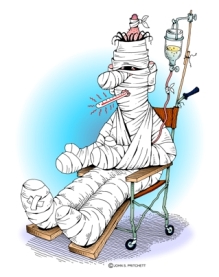 ObamaCare was enacted.
- State insurance regulators have approved rates for 2014 that are at least 50 percent lower on average than those currently available in New York.
- Beginning in October, individuals in New York City who now pay $1,000 a month or more for coverage will be able to shop for health insurance for as little as $308 monthly.
- ObamaCare is spurring competition among insurers that are anticipating an influx of new customers.
- The new premium rates do not affect a majority of New Yorkers, who receive insurance through their employers, only those who must purchase it on their own.
- About 2.6 million are uninsured in New York State.
- A person with a $20,000 income will pay about $85 a month for a silver plan, while someone earning $25,000 will pay about $145 a month for a silver plan.
- Lower health insurance costs bolster communities because residents have more discretionary income to spend in their own neighborhoods.
- Benefits experts predict more employee mobility because workers won’t be tied to jobs just for the health insurance.
- If they tell you Obamacare is not working, tell them this!
Some Facts about Governor Scott
We live in Florida, the sunshine state with lovely weather, plenty of Solivita opportunities to reinvent oneself and stay healthy, meet new friends and enjoy a good life.
What’s wrong with this picture? Florida, the 4th highest in population among the states, has a political climate that is toxic to 99% of its nearly 19 million citizens. Led by a governor who has only a 31% approval rating from voters (Quinnipiac), Scott has tried to sell the state to private interests since day one of his tenure. Florida has not had a friendly climate for the majority.
A few facts about Governor Rick Scott:
- While CEO of Columbia/HCA in the 1990’s, Rick Scott presided over the largest Medicare fraud case in US history, $1.7 Billion. When asked to assist the federal government in their inquiries into the allegations, Scott took the 5th amendment 75 times.
- His first words at the podium when making his acceptance speech were: “Florida is open for business,” (source: Herald Tribune 11-4-10) after spending $73 million to purchase the election, one third of his $218 personal wealth. No one realized that he meant to sell off the state to private interests a piece at a time.
- Shortly after being elected, Scott tried to privatize the state prison system, seeking to turn over tax payer purchased prisons to his friends, by awarding contracts to campaign contributor GEO. He was defeated in that by a campaign of heavy citizen lobbying against the measure. The list of reasons why this is a bad idea is very long.
- He’s a big fan of privatizing schools and deregulating industry at every turn.
- He promised to bring 700,000 jobs to Florida in seven years but one of his early budget proposals was to lay off 8,000 state workers, an interesting contrast from his campaign pledge. He has made every attempt to purge the jobs of state and local workers.
- Florida was one of the nation’s most severe election law violators during the 2012 presidential elections and Governor Scott worked with the Republican legislature to suppress voters at every turn. Once again, Florida was embarrassed in a national election.
One goal of the Solivita Democratic Club is to replace Governor Rick Scott in 2014 along with as many Republican legislators as possible. We believe we need a governor who works for the people of Florida, not just the 1%.
Help now to change the state of Florida for the benefit of the 99%! Please donate or join the Solivita Democratic Club today.